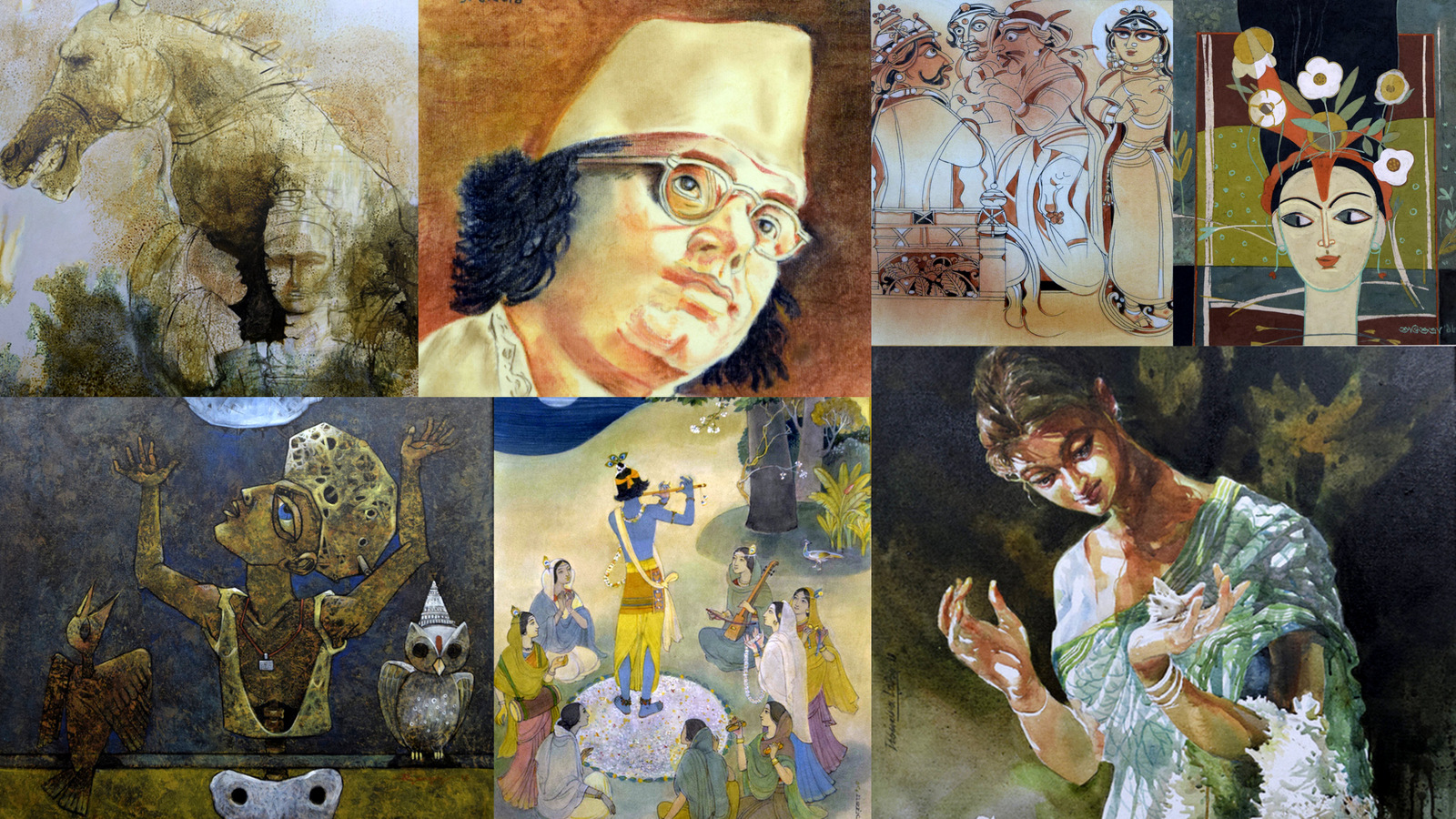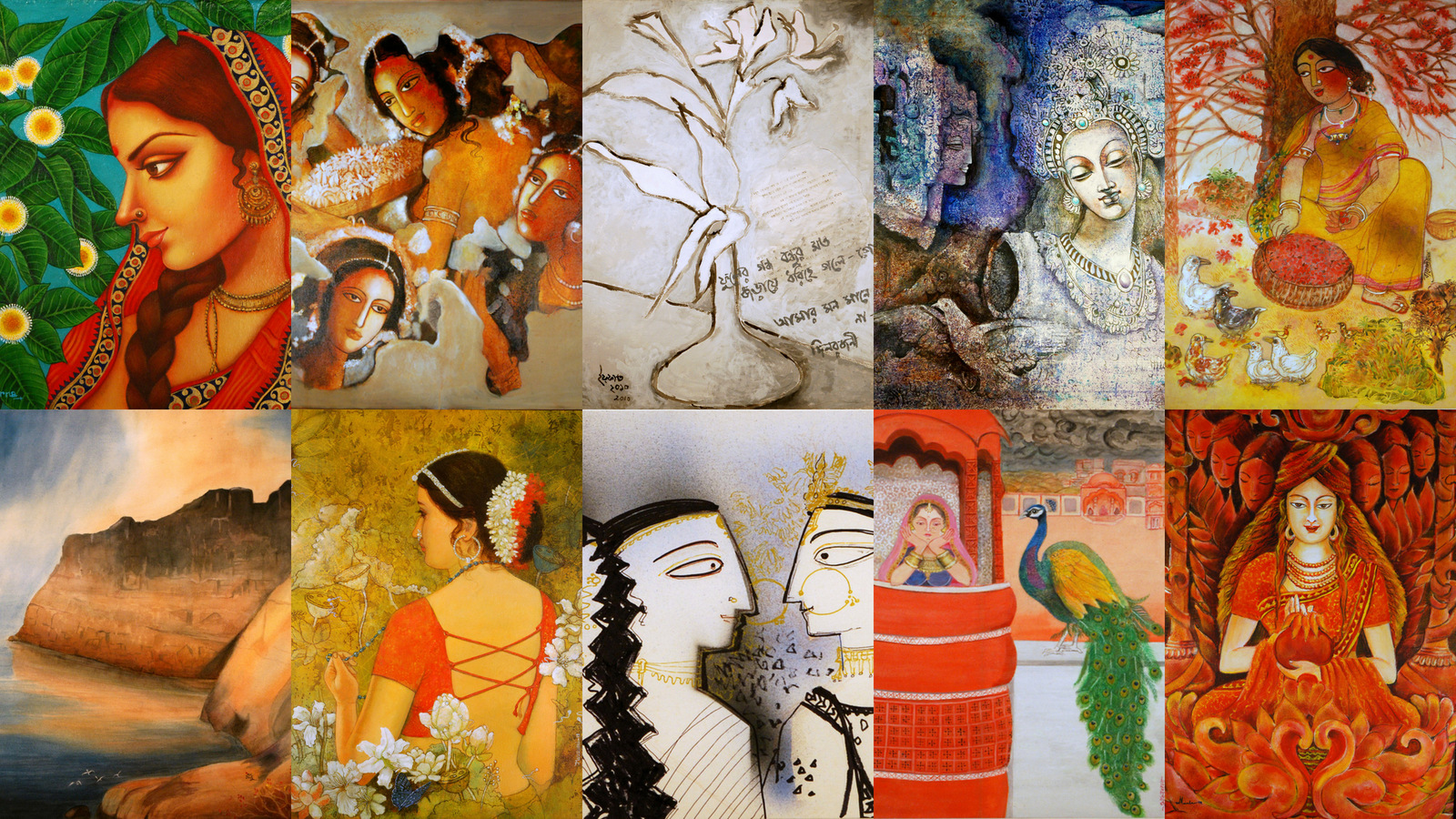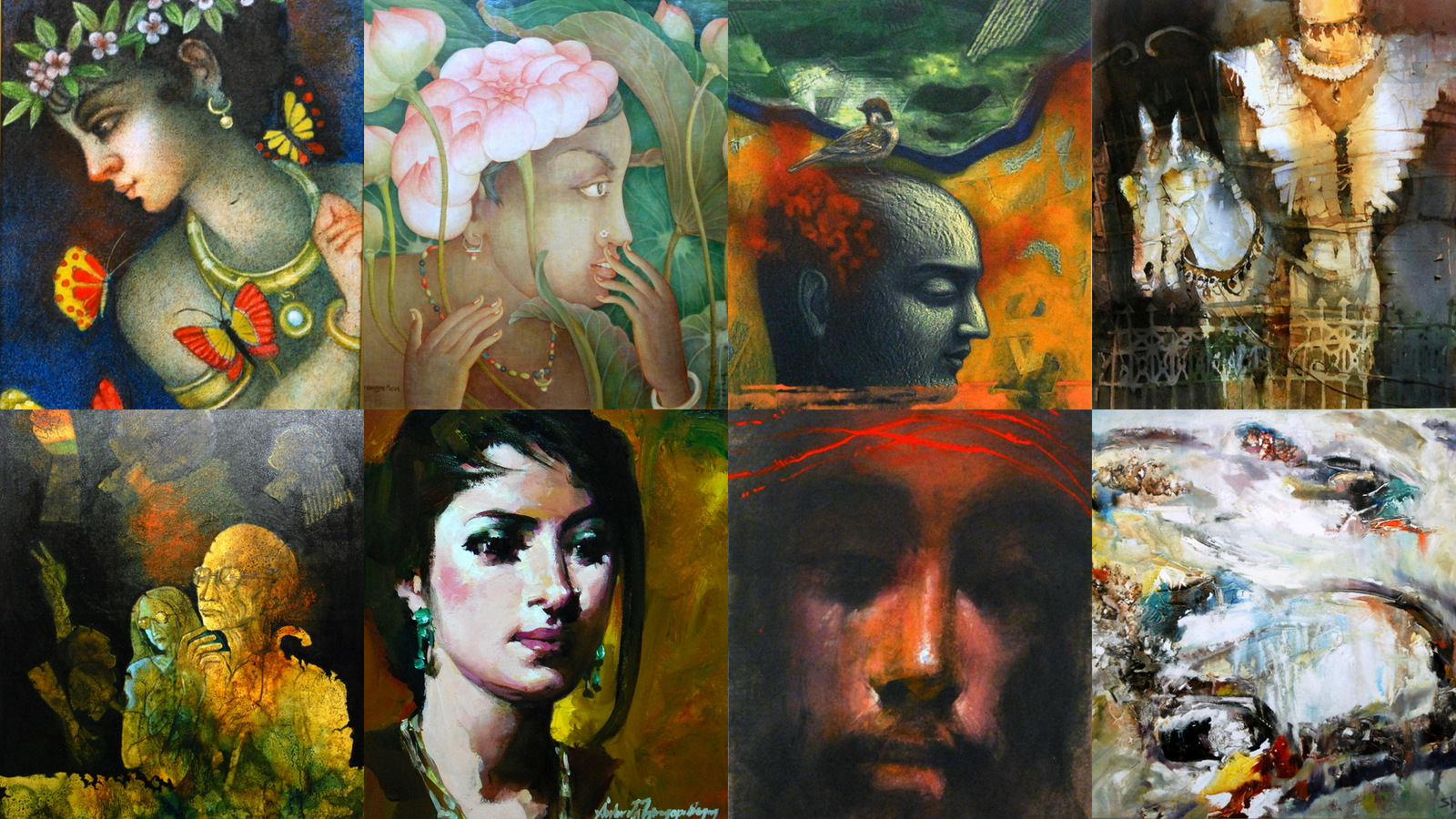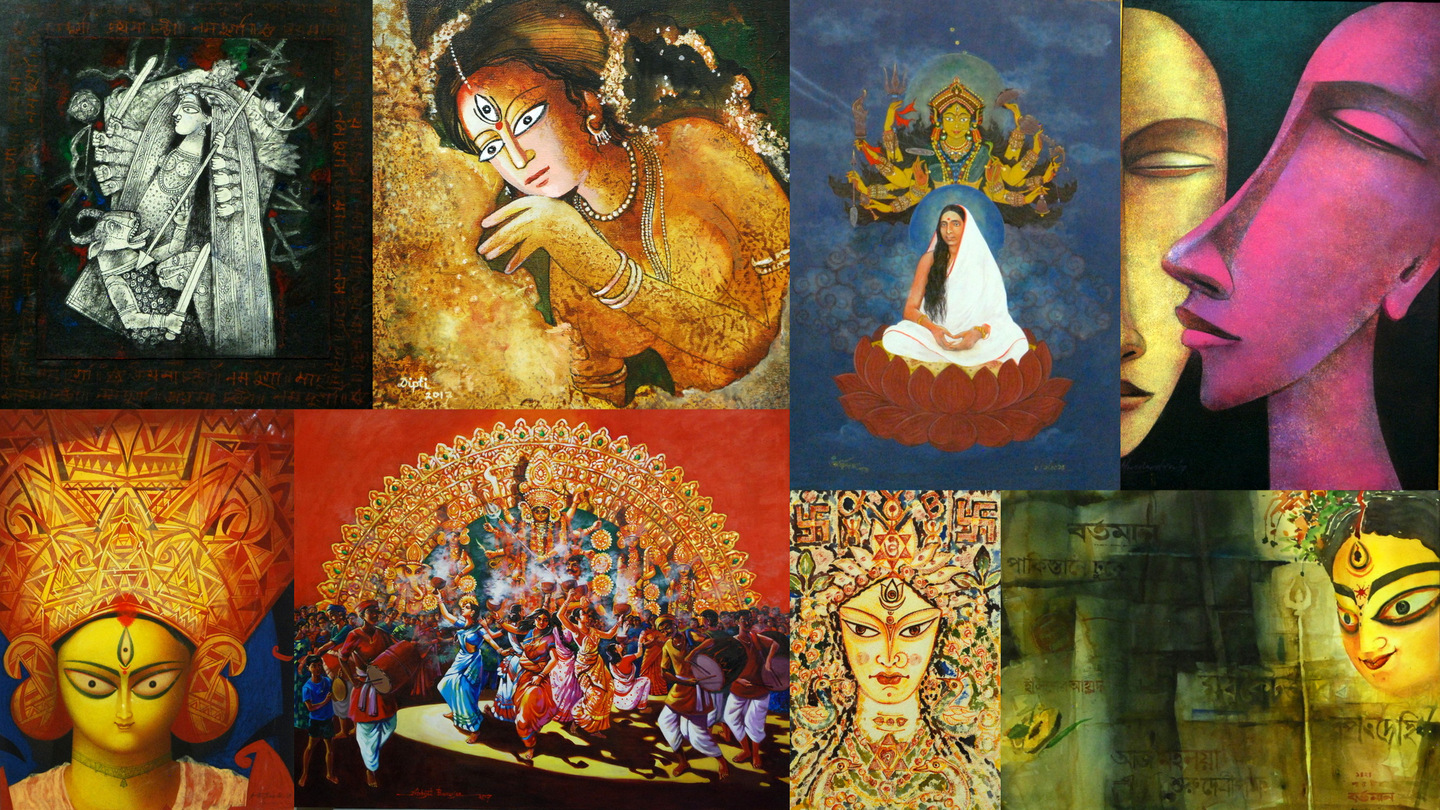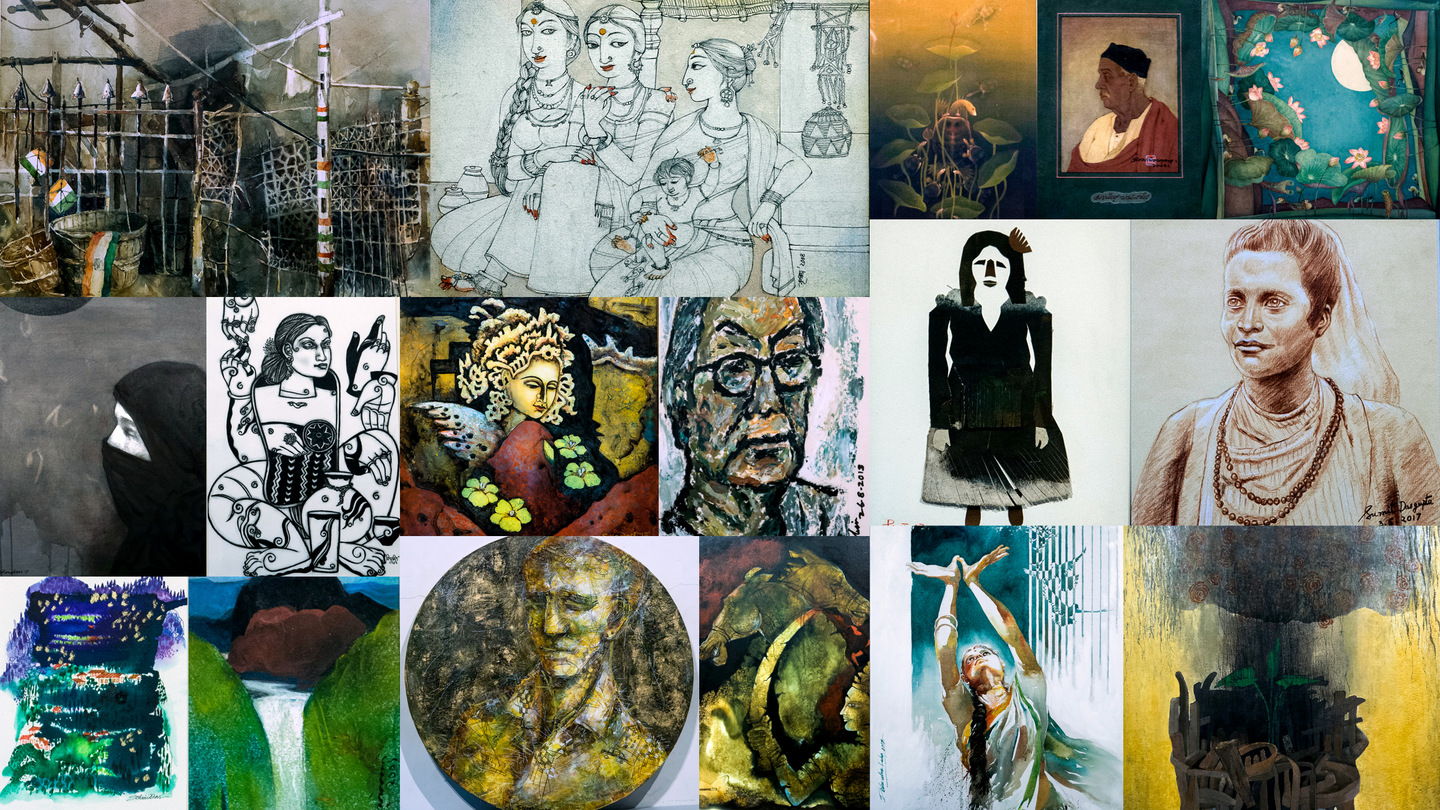
|
|
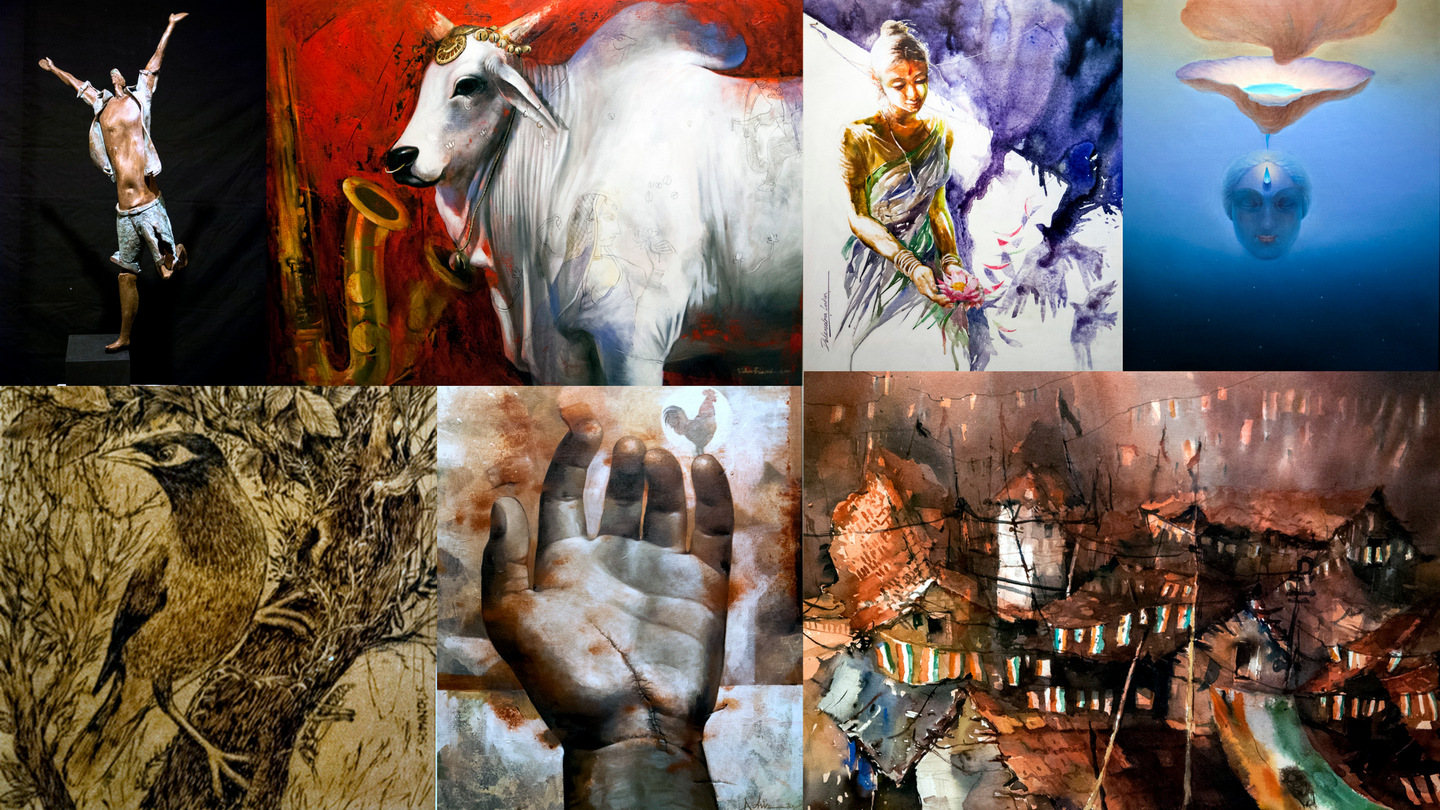
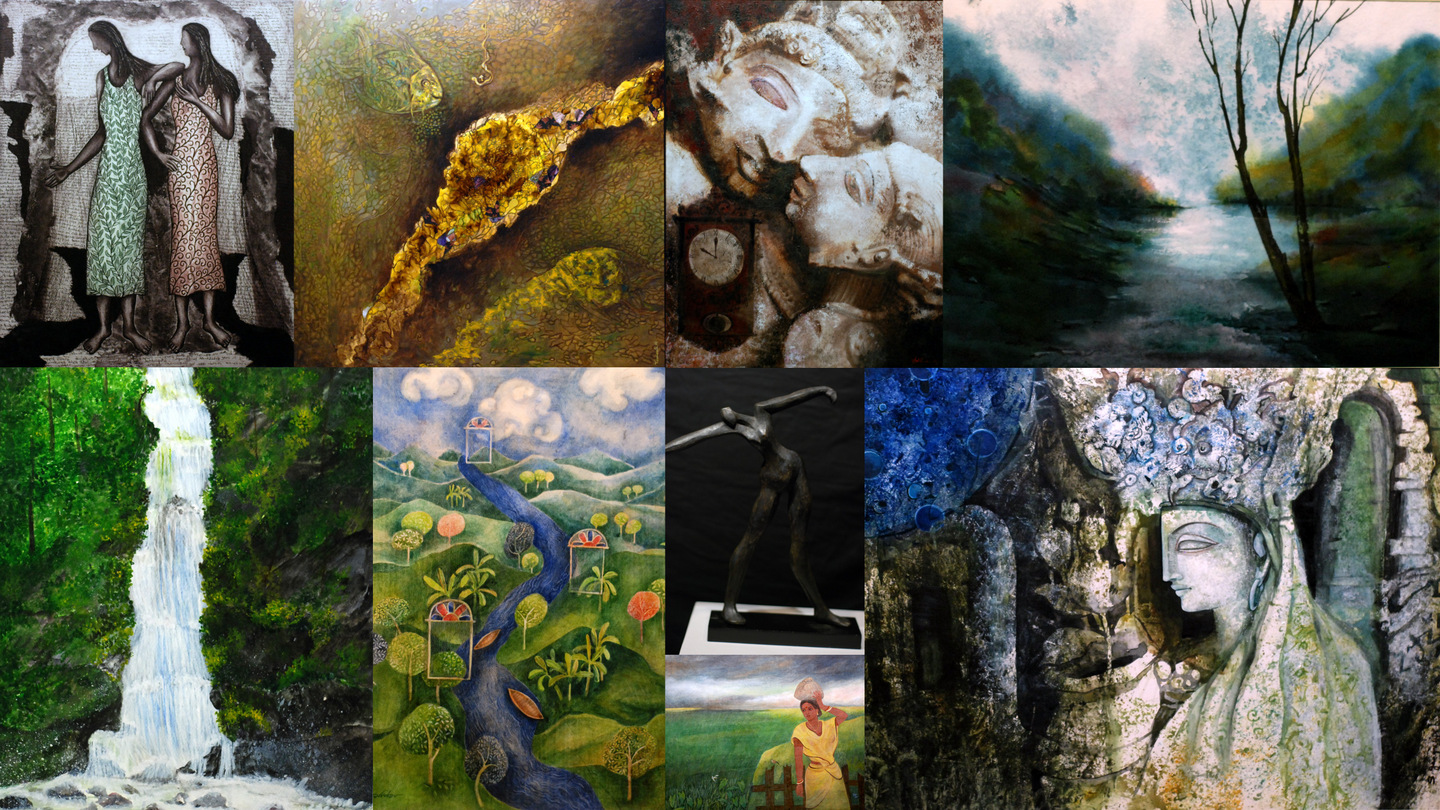
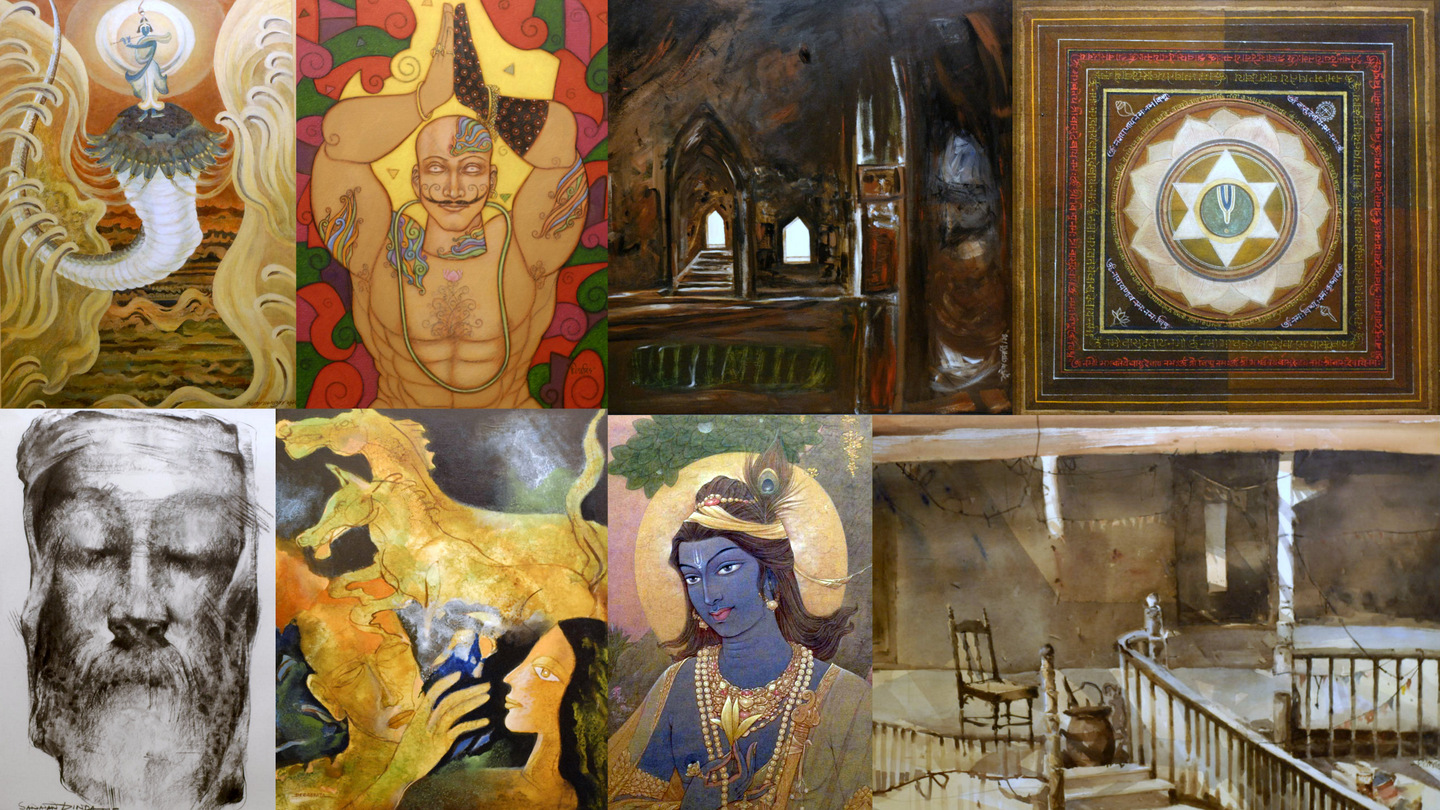
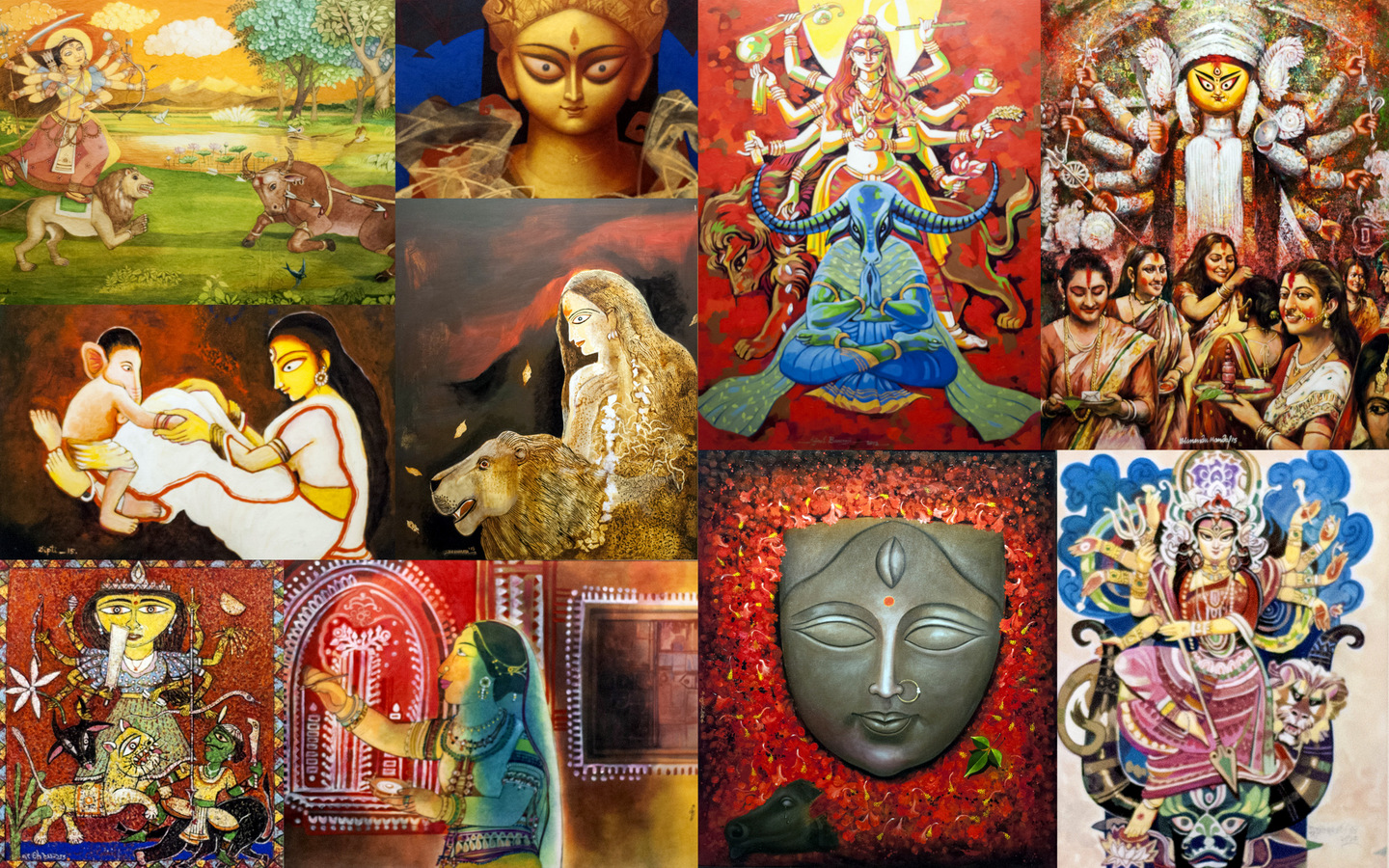
The Mother on Art
|
You have said: "If you surrender [to the Divine] you have to give up effort, but that does
not mean you have to abandon also all willed action". But if one wants to do something, it
means personal effort, doesn't it? What then is the will?
There is a difference between the will and this feeling of tension, effort, of counting only on
oneself, having recourse to oneself alone which personal effort means; this kind of tension, of
something very acute and at times very painful; you count only on yourself and you have the feeling
that if you do not make an effort at every minute, all will be lost. This is personal effort.
But the will is something altogether different. It is the capacity to concentrate on everything
one does, to do it as best as one can and not stop doing it until one receives a very precise intimation
that it is finished. It is difficult to explain to you. But suppose, for example, that through a
combination of circumstances a work comes into your hands. Take an artist who has in one way or another
received an inspiration and decided to paint a picture. He knows very well that if he has no inspiration
and is not sustained by forces other than his own, he will do nothing much. It will look more like a
daub than a painting. He knows this. But it has been settled, the painting is to be done; there may be
many reasons for it, but the painting is to be done. Then if he had the passive attitude, well, he would
get out his palette, his colours, his brushes, his canvas and then sit down in front of them and say
to the Divine:"Now you are going to paint". But the Divine does not do things that way. The painter
himself must take up everything and arrange everything, concentrate on his subject, find the forms and
the colours that will express it and put his whole will for a more and more perfect execution. His will
must be there all the time. But he will keep the sense that he must be open to the inspiration, he will
not forget that in spite of all his knowledge of technique, in spite of the care he takes to arrange,
organise and prepare his colours and the forms of his design, in spite of all that, if he has no
inspiration, it will be one picture among a million others and it will not be very interesting. He does
not forget. He attempts, he tries to see, to feel what he wants his painting to express and in what way
it should be expressed. He has his colours, he has his brushes, he has a model, he has made his sketch
which he will enlarge and make into a picture, he calls his inspiration. There are even some who manage
to have a clear, precise vision of what is to be done. But then, day after day, hour after hour, they have
this will to work, to study, to do with care all that must be done until they reproduce as perfectly as
they can the first inspiration...That person has worked for the Divine, in communion with Him,
but not in a passive way, not with a passive surrender; it is with an active surrender, a dynamic will.
The result generally is something very good. Well, the example of the painter is interesting, because
a painter who is truly an artist is able to see what he is going to do, he is able to connect
himself to the Divine Power that is beyond expression and inspires all expression. For the poet,
the writer, it is the same thing and for all people who do something, it is the same.
|
|
Is it possible for a Yogi to become an artist or can an artist be a Yogi? What is the relation of Art to Yoga?
The two are not as antagonistic as you seem to think. There is nothing to prevent a Yogi from being an artist and an artist from being an Yogi.
|
|
But when you are in Yoga, there is a profound change in the value of things, of Art as of everything
else; you begin to look at Art from a very different standpoint. It is no longer the one supreme all-engrossing
thing for you, no longer an end in itself. Art is a means, not an end; it is a means of expression. And
the artist then ceases too to believe that the whole world turns round what he is doing or that his work
is the most important thing that has ever been done. His personality counts no longer; he is an agent,
a channel, his art a means of expressing his relations with the Divine. He uses it for that purpose as
he might have used any other means that were part of the powers of his nature.
|
But does an artist feel at all any impulse to create once he takes up Yoga?
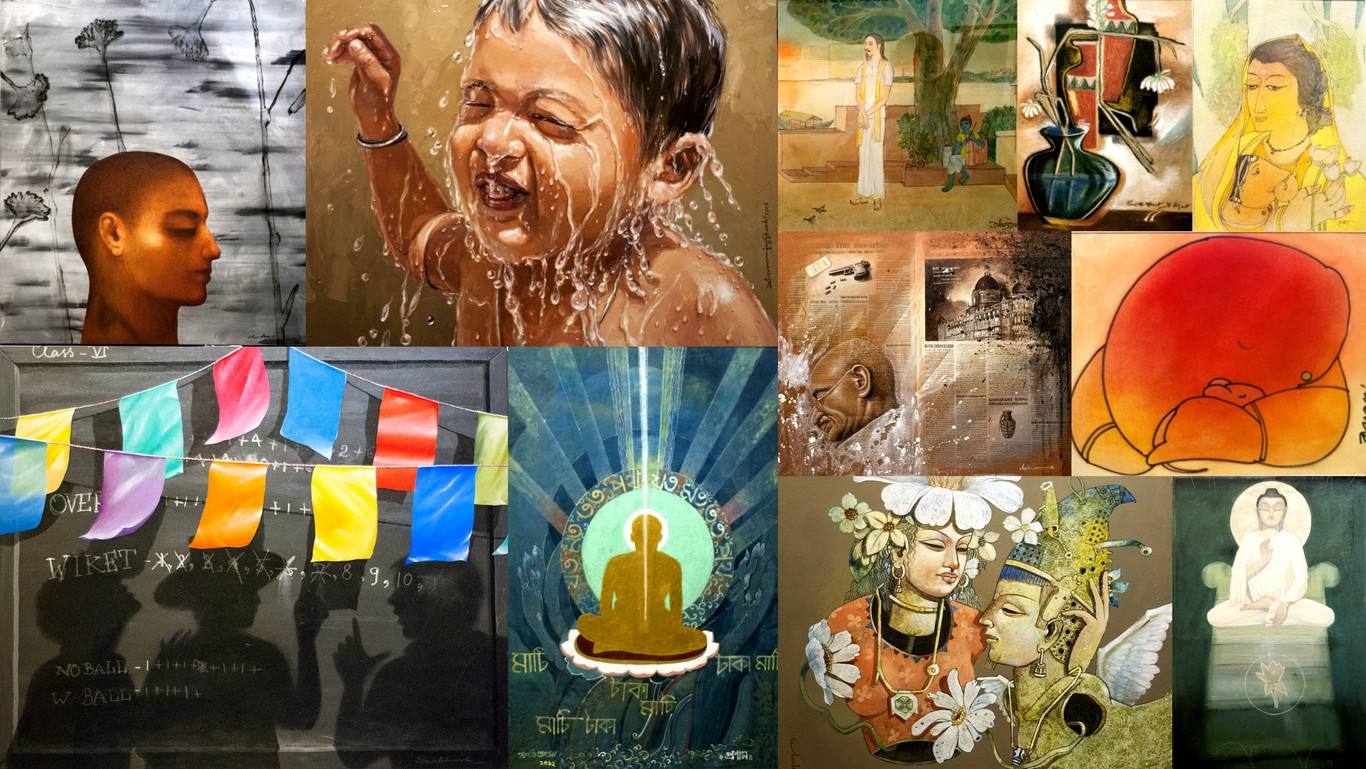
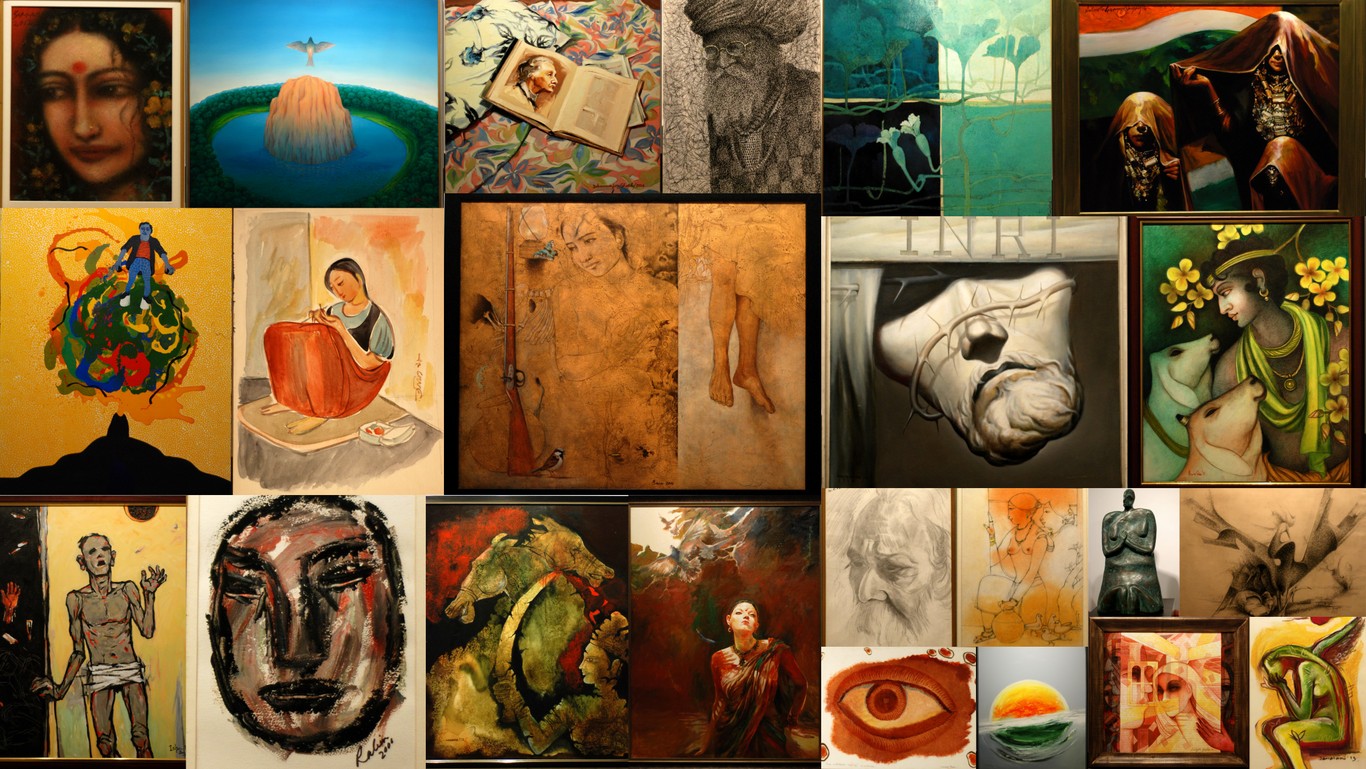
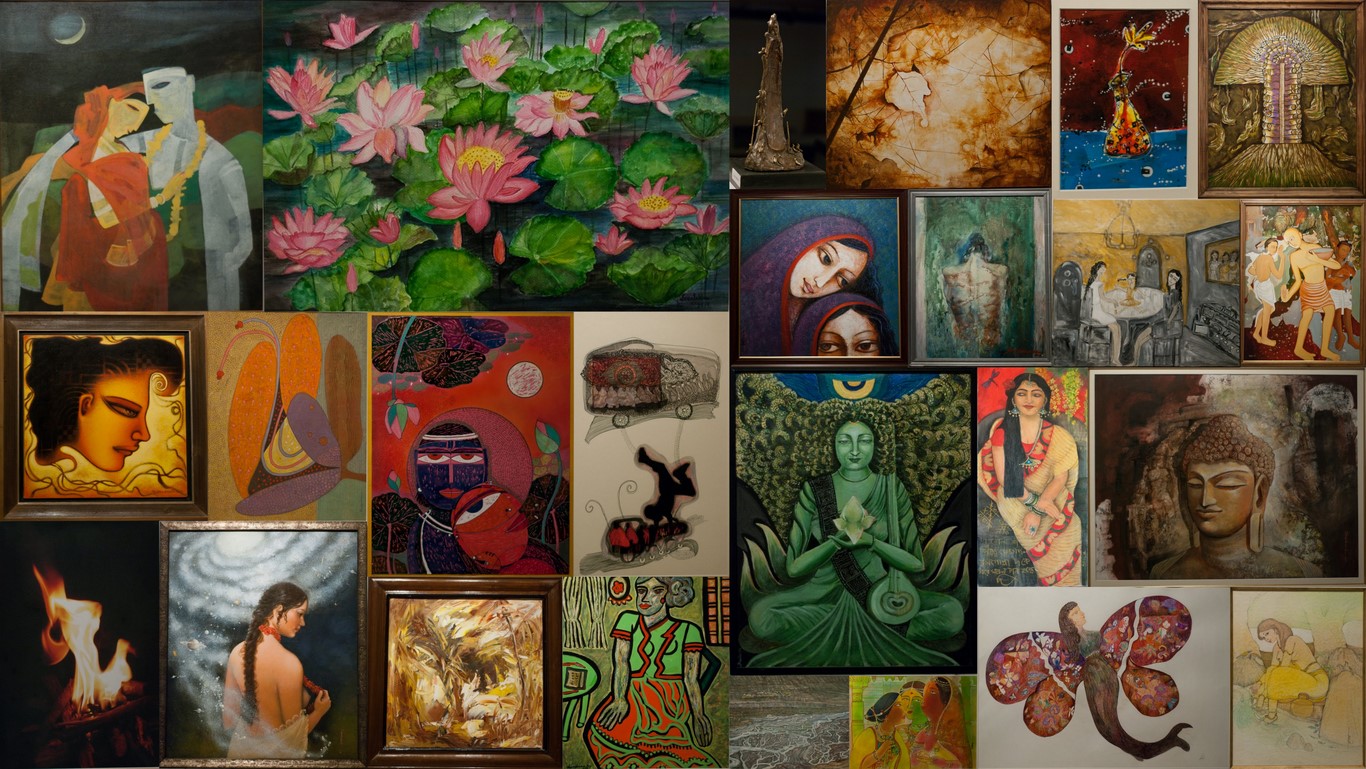
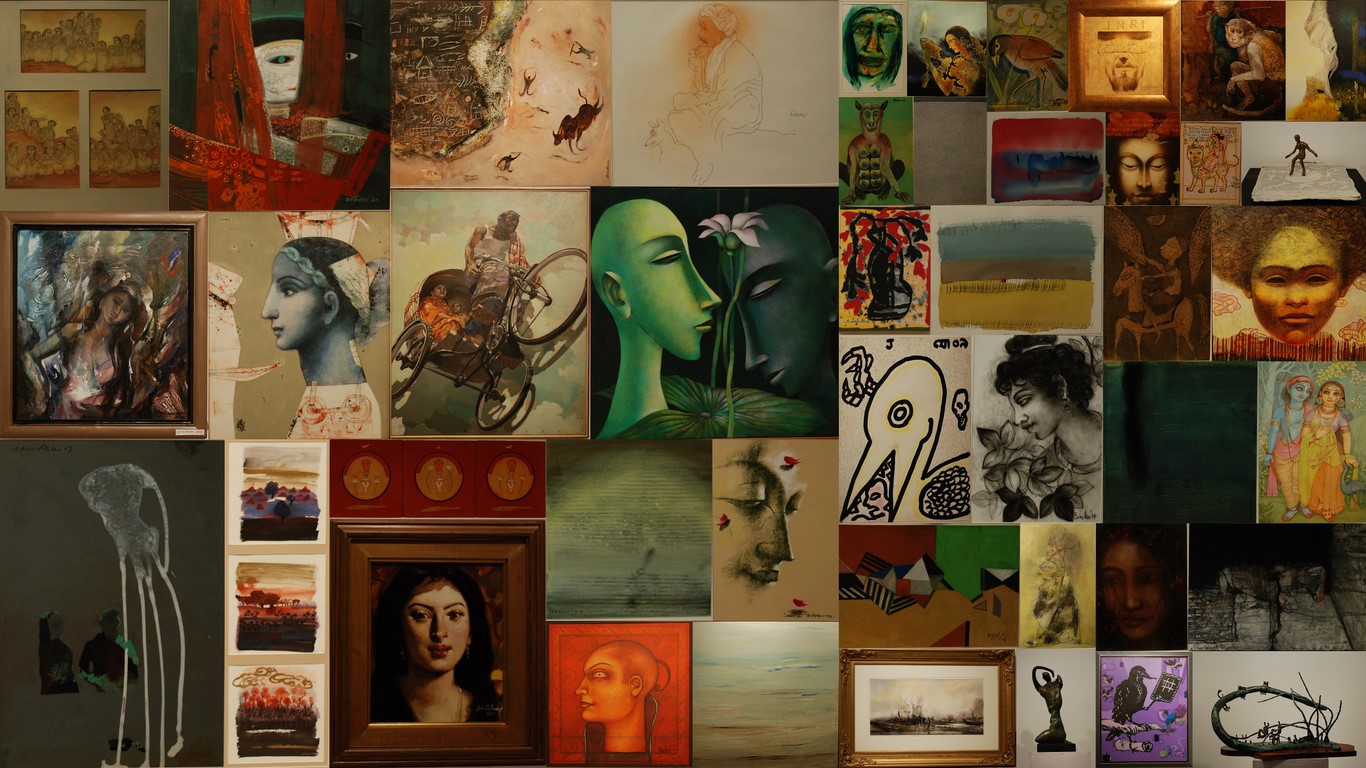
Why should he not have the impulse? He can express his relation with the Divine in the way of his art, exactly as he would in any other. If you want art to be the true and the highest art, it must be the expression of a divine world brought down into this material world. All true artists have some feeling of this kind, some sense that they are intermediaries between a higher world and this physical existence. If you consider it in this light, Art is not very different from Yoga. But most often the artist has only an indefinite feeling, he has not the knowledge. Still I knew some who had it; they worked consciously at their art with the knowledge. In their creation they did not put forward their personality as the most important factor; they considered their work as an offering to the Divine, they tried to express by it their relation with the Divine.
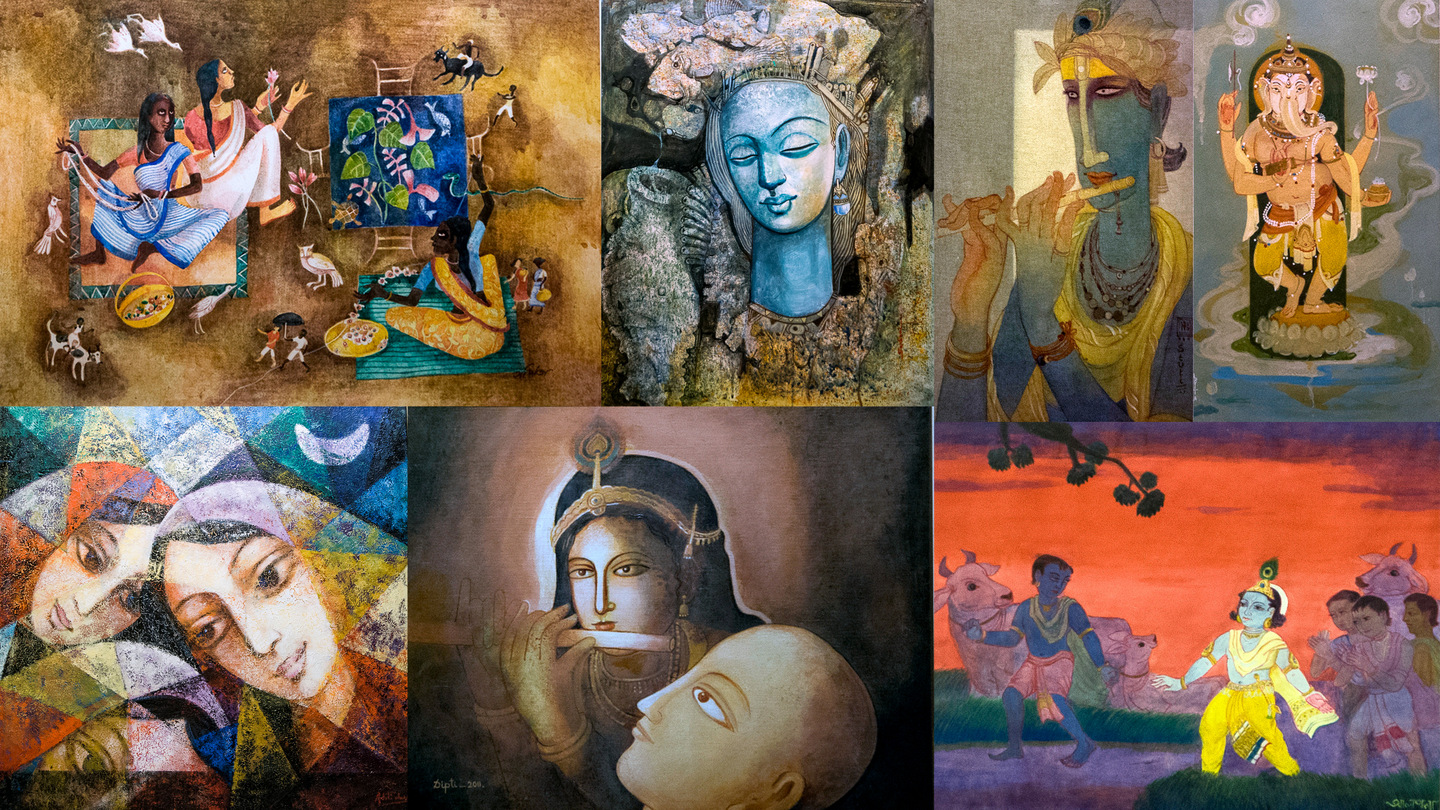
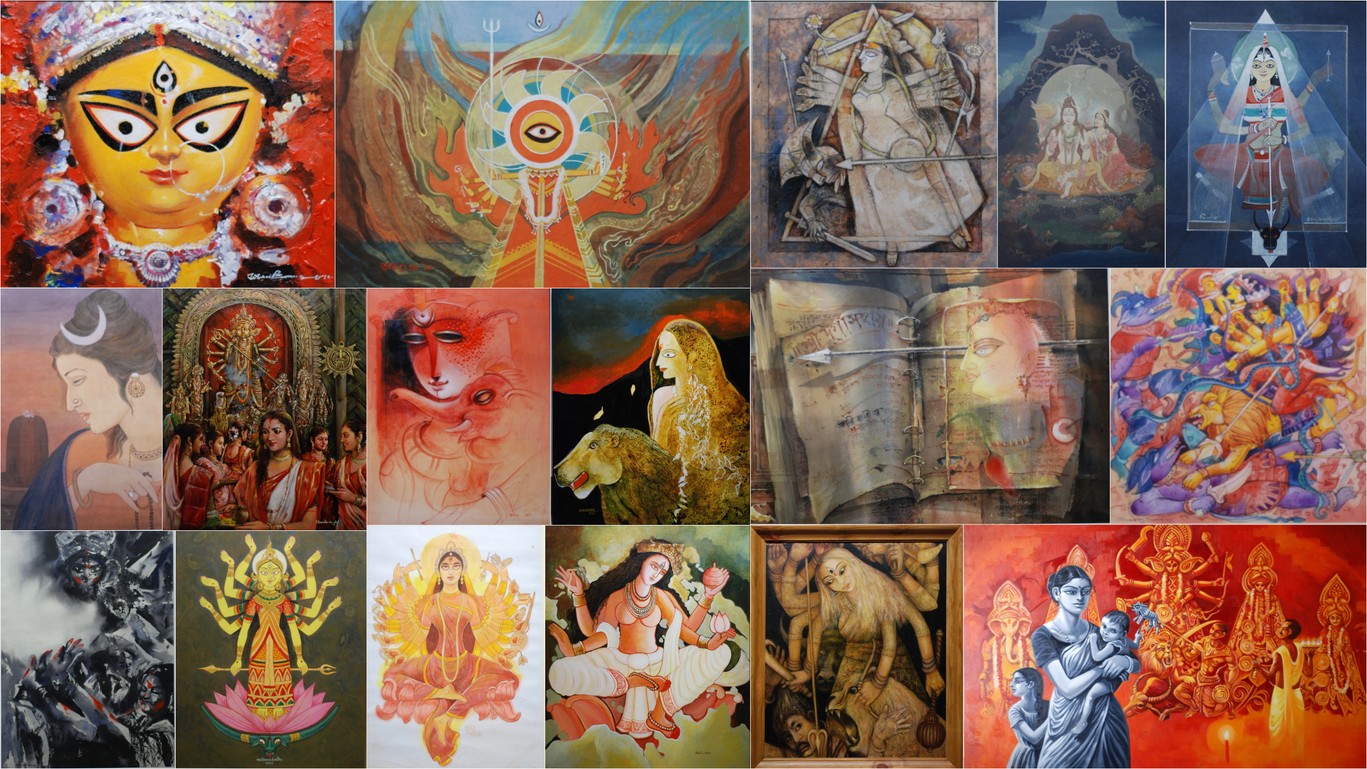
This was the avowed function of Art in the Middle Ages. The "primitive" painters, the builders of cathedrals in Mediaeval Europe had no other conception of Art. In India all her architecture, her sculpture, her painting have proceeded from this source and were inspired by this ideal. The songs of Mirabai and the music of Thyagaraja, the poetic literature built up by devotees, saints and Rishis rank among the world's greatest artistic possessions.
But does the work of an artist improve if he does Yoga?
|
|
The discipline of Art has at its centre the same principle as the discipline of Yoga. In both the aim is to become more and more conscious; in both you have to learn to see and feel something that is beyond the ordinary vision and feeling, to go within and bring out from there deeper things. Painters have to follow a discipline for the growth of the consciousness of their eyes, which in itself is almost a Yoga. If they are true artists and try to see beyond and use their art for the expression of the inner world, they grow in consciousness by this concentration, which is not other than the consciousness given by Yoga.
|
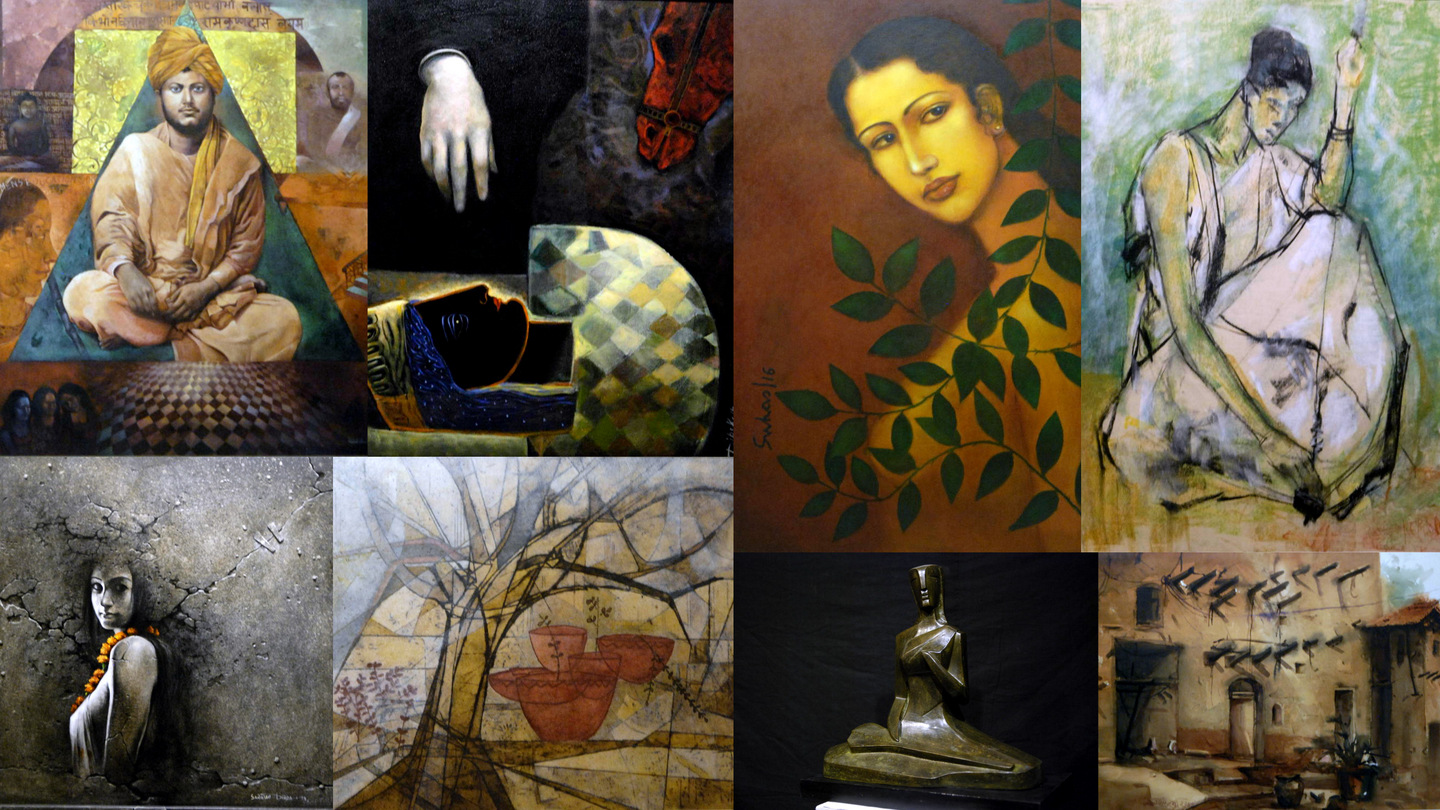
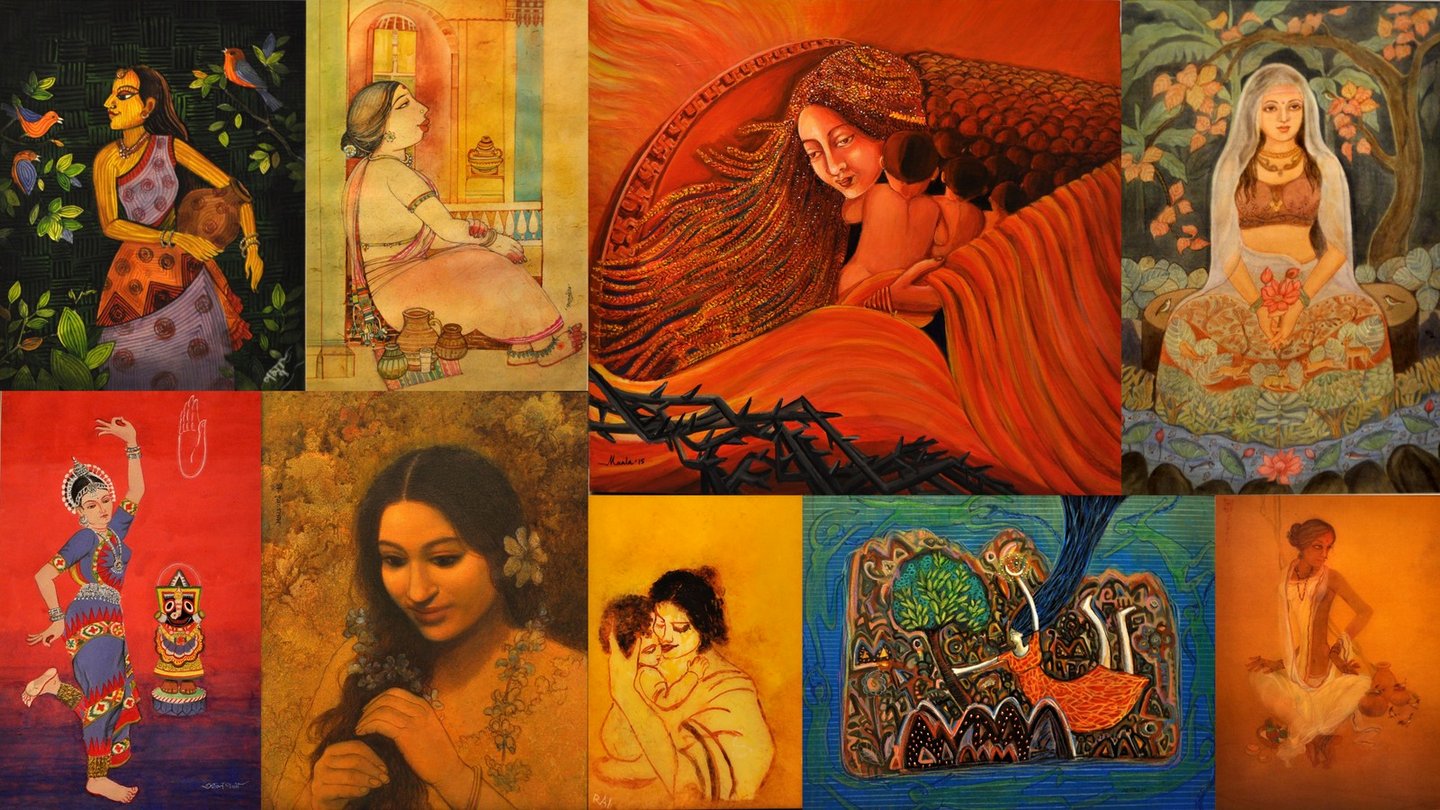
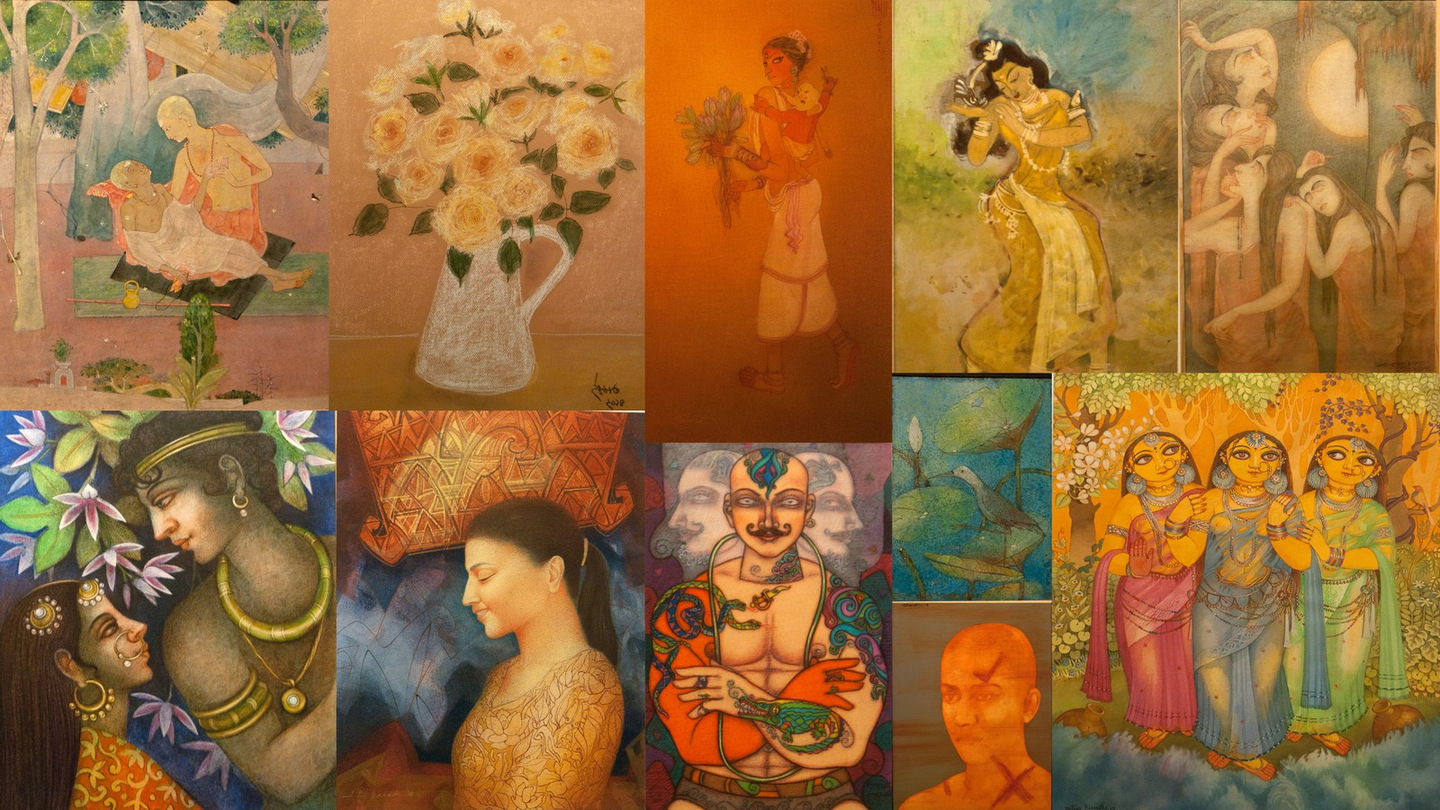
Why then should not Yogic consciousness be a help to artistic creation? I have known some who had very little training and skill and yet through Yoga acquired a fine capacity in writing and painting. Two examples I can cite to you. One was a girl who had no education whatever; she was a dancer and danced tolerably well. After she took up Yoga, she danced only for friends; but her dancing attained a depth of expression and beauty which was not there before. And although she was not educated, she began to write wonderful things; for she had visions and expressed them in the most beautiful language. But there were ups and downs in her Yoga, and when she was in a good condition, she wrote beautifully, but otherwise was quite dull and stupid and uncreative. The second case is that of a boy who had studied art, but only just a little. The son of a diplomat, he had been trained for the diplomatic career; but he lived in luxury and his studies did not go far. Yet as soon as he took up Yoga, he began to produce inspired drawings which carried the expression of an inner knowledge and were symbolic in character; in the end he became a great artist.
Why are artists generally irregular in their conduct and loose in character?
When they are so, it is because they live usually in the vital plane, and the vital part in them is extremely sensitive to the forces of the world and receives from it all kinds of impressions and impulsions over which they have no controlling power. And often too they are very free in their minds and do not believe in the petty social conventions and moralities that govern the life of the ordinary people. They do not feel bound by the customary rules of conduct and have not yet found an inner law that would replace them. As there is nothing to check the movements of their desire-being, they lead easily a life of liberty or license. But this does not happen with all. I lived ten years among artists and found them to be bourgeois to the core; they were married and settled, good fathers, good husbands, and lived up to the most strict moral ideas of what should and what should not be done.
There is one way in which Yoga may stop the artist's productive impulse. If the origin of his art is in the vital world, once he becomes a Yogi he will lose his inspiration or, rather, the source from which his inspiration used to come will inspire him no more, for then the vital appears in its true light; it puts on its true value, and that value is very relative. Most of those who call themselves artists draw their inspiration from the vital world only; and it carries in it no high or great significance. But when a true artist, one who looks for his creative source to a higher world, turns to Yoga, he will find that his inspiration becomes more direct and powerful and his expression clearer and deeper. Of those who possess a true value the power of Yoga wil increase the value, but from one who has only some false appearance of art even that appearance will vanish or lose its appeal. To one earnest in Yoga, the first simple truth that strikes his opening vision is that what he does is a very relative thing in comparison with the universal manifestation, the univeral movement. But an artist is usually vain and looks upon himself as a highly important personage, a kind of demigod in the human world. Many artist say that if they did not believe what they do to be of a supreme importance, they would not be able to do it. But I have known some whose inspiration was from a higher world and yet they did not believe that what they did was of so immense an importance. That is nearer to the spirit of true art. If a man is truly led to express himself in art, it is the way the Divine has chosen to manifest in him, and then by Yoga his art will gain and not lose. But there is all the question: is the artist appointed by the Divine or self-appointed?
But if one does Yoga can he rise to such heights as Shakespeare or Shelley? There has been no such instance.
Why not? The Mahabharata and Ramayana are certainly not inferior to anything created by Shakespere or any other poet, and they are said to have been the work of men who were Rishis and had done Yogic tapasya. The Gita which, like the Upanishads, ranks at once among the greatest literary and the greates spiritual works, was not written by one who had no experience of Yoga. And where is the inferiority to your Milton and Shelley in the famous poems written whether in India or Persia or else where by men known to be saints, Sufis, devotees? And, then, do you know all the Yogis and their work? Among the poets and creators can you say who were or who were not in conscious touch with the Divine? There are some who are not officially Yogis, they are not gurus and have no disciples; the world does not know what they do; they are not anxious for fame and do not attract to themselves the attention of men; but they have the higher consciousness, are in touch with a Divine Power, and when they create they create from there. The best paintings in India and much of the best statuary and architecture were done by Buddhist monks who passed their lives in spiritual contemplation and practice; they did supreme artistic work, but did not care to leave their name to posterity. The chief reason why Yogis are not known by their art is that they do not consider their art-expression as the most important part of their life and do not put so much time and energy into it as a mere artist. And what they do does not always reach the public. How many there are who have done great things and not published them to the world!
Have Yogis done greater dramas than Shakespeare?
Drama is not the highest of the arts. Someone has said that drama is greater than any other art and art is greater than life.But it is not quite like that. The mistake of the artist is to believe that artisitic production is something that stands by itself and and for itself, independent of the rest of the world. Art as understood by these artists is like a mushroom on the wide soil of life, something casual and external, not something intimate to life; it does not reach and touch the deep and abiding realities, it does not become an intrinsic and inseparable part of existence. True art is intended to express the beautiful, but in close intimacy with the universal movement. The greatest nations and the most cultured races have always considered art as a part of life and made it subservient to life. Art was like that in Japan in its best moments; it was like that in all the best moments of the history of art. But most artists are like parasites growing on the margin of life; they do not seem to know that art should be the expression of the Divine in life and through life.
|
|
In everything, everywhere, in all relations truth must be brought out in its all-embracing rhythm and every movement of life should be an expression of beauty and harmony. Skill is not art, talent is not art. Art is a living harmony and beauty that must be expressed in all the movements of existence. This manifestation of beauty and harmony is part of the Divine realisation upon earth, perhaps even its greatest part.
|
For, from the supramental point of view beauty and harmony are as important as any other expression
of the Divine. But they should not be isolated, set up apart from all other relations, taken out from the
ensemble; they should be one with the expression of life as a whole. People have the habit of saying,
"Oh, it is an artist!" as if an artist should not be a man among other men but must be an extraordinary being
belonging to a class by itself, and his art too something extraordinary and apart, not to be confused with
other ordinary things of the world. The maxim, "Art for art's sake", tries to impress and emphasise as a truth the
same error. It is the same mistake as when men place in the middle of their drawing-rooms a framed
picture that has nothing to do either with the furniture or the walls, but is put there only because it is
an "object of art".
|
|
True art is a whole and an ensemble; it is one and of one piece with life.
|
You see something of this intimate wholeness in ancient Greece and ancient Egypt;
for there pictures and statues and all objects of art were made and arranged as part of the architectural
plan of a building, each detail a portion of the whole. It is like that in Japan, or at least it was so
till the other day before the invasion of a utilitarian and practical modernism. A Japanese house is
a wonderful artistic whole; always the right thing is there in the right place, nothing wrongly set,
nothing too much, nothing too little. Everything is just as it needed to be, and the house itself
blends marvellously with the surrounding nature. In India, too, painting and sculpture and architecture
were one integral beauty, one single movement of adoration of the Divine.
There has been in this sense a great degeneration since then in the world. From the time of Victoria
and in France from the Second Empire we have entered a period of decadence. The habit has grown of hanging
up in rooms pictures that have no meaning for the surrounding objects; any picture, any artistic object
could now be put anywhere and it would make small difference. Art now is meant to show skill and cleverness
and talent, not to embody some integral expression of harmony and beauty in a home.
But latterly there has come a revolt against this lapse into bourgeois taste. The reaction was so violent
that it looked like a complete aberration and art seemed to sink into the absurd. Slowly, however,
out of the chaos something has emerged, something more rational, more logical, more coherent to which
can once more be given the name of art, an art renovated and perhaps, or let us hope so, regenerated.
|
|
Art is nothing less in its fundamental truth than the aspect of beauty of the Divine manifestation.
|
Perhaps, looking from this standpoint, there will be found very few true artists; but still
there are some and these can very well be considered as Yogis. For like a Yogi an artist goes into
deep contemplation to await and receive his inspiration. To create something truly beautiful, he has
first to see it within, to realise it as a whole in his inner consciousness; only when so found, seen, held within,
can he execute it outwardly; he creates according to this greater inner vision. This too is a kind of
yogic discipline, for by it he enters into intimate communion with the inner worlds. A man like Leonardo da Vinci
was a Yogi and nothing else. And he was, if not the greatest, at least one of the greatest painters, -
although his art did not stop at painting alone.
Music too is an essentially spiritual art and has always been associated with religious
feeling and an inner life. But, here too, we have turned it into something independent
and self-sufficient, a mushroom art, such as is operatic music. Most of the artistic
productions we come across are of this kind and at best interesting from the point of view
of technique. I do not say that even operatic music cannot be used as a medium of a higher
art expression; for whatever the form, it can be made to serve a deeper purpose. All depends
on the thing itself, on how it is used, on what is behind it. There is nothing that cannot
be used for the Divine purpose - just as anything can pretend to be the Divine and yet be of
the mushroom species.
Among the great modern musicians there have been several whose consciousness,
when they created, came into touch with a higher consciousness.
Cesar Franck played on the organ as one inspired; he had an opening into the psychic
life and he was conscious of it and to a great extent expressed it. Beethoven, when
he composed the Ninth Symphony, had the vision of an opening into a higher world and of
the descent of a higher world into this earthly plane. Wagner had strong and powerful
intimations of the occult world; he had the instinct of occultism and the sense of the
occult and through it he received his greatest inspirations. But he worked mainly on
the vital level and his mind came in constantly to interfere and mechanised his inspiration.
His work for the greater part is too mixed, too often obscure and heavy, although
powerful. But when he would cross the vital and the mental levels and reach a higher world,
some of the glimpses he had were of an exceptional beauty, as in Parsifal, in some
parts of Tristan and Iseult and most in its last great Act.
Look again at what the moderns have made of the dance; compare it with what the dance
once was. The dance was once one of the highest expressions of the inner life; it
was associated with religion and it was an important limb in sacred ceremony, in the celebration of
festivals, in the adoration of the Divine. In some countries it reached a very high degree
of beauty and an extraordinary perfection. In Japan they kept up the tradition
of the dance as a part of the religious life and, because the strict sense of beauty
and art is a natural posession of the Japanese, they did not allow it degenerate into
something of lesser significance and smaller purpose. It was the same in India. It is
true that in our days there have been attempts to resuscitate the ancient Greek and
other dances; but the religious sense is missing in all such resurrections
and they look more like rhythmic gymnastics than dance.
Today Russian dances are famous, but they are expressions of the vital world
and there is even something terribly vital in them. Like all that comes to us from
that world, they may be very attractive or very repulsive, but they always stand for themselves
and not for the expression of the higher life. The very mysticism of the Russians is
of a vital order. As technicians of the dance they are marvellous; but technique is
only an instrument. If your instrument is good, so much the better, but so long as it
is not surrendered to the Divine, however fine it may be, it is empty of the highest
and cannot serve a divine purpose. The difficulty is that most of those who become
artists believe that they stand on their own legs and have no need to turn to the Divine.
It is a great pity; for in the divine manifestation skill is as useful an element as anything else.
Skill is one part of
the divine fabric, only it must know how to subordinate itself to greater things.
There is a domain far above the mind which we could call the world of Harmony and,
if you can reach there, you will find the root of all harmony that has been manifested
in whatever form upon earth. For instance, there is a certain line of music, consisting
of a few supreme notes, that was behind the production of two artists who came one after
another - one a concerto of Bach, another a concerto of Beethoven. The two are not alike on
paper and differ to the outward ear, but in their essence they are the same. One and
the same vibration of consciousness, one wave of significant harmony touched both
these artists. Beethoven caught a larger part, but in him it was more mixed with
the inventions and interpolations of his mind; Bach received less, but what he seized
of it was purer. The vibration was that of the victorious emergence of consciousness,
consciousness tearing itself out of the womb of unconsciousness in a triumphant uprising
and birth.
If by Yoga you are capable of reaching this source of all art, then you are
master, if you will, of all arts. Those that may have gone there before, found it perhaps
happier, more pleasant or full of a rapturous ease to remain and enjoy the Beauty
and the Delight that are there, not manifesting it, not embodying it upon earth.
But this absention is not all the truth nor the true truth of Yoga; it is rather a
deformation, a diminution of the dynamic freedom of Yoga by the more negative sprit
of Sannyasa. The will of the Divine is to manifest, not to remain altogether withdrawn
in inactivity and an absolute silence; if the Divine Consciousness were really an inaction
of unmanifesting bliss, there would never have been any creation.
|
|
|
|
Mother, I did not understand what you have said: "True art is a whole and an ensemble; it
is one and and of one piece with life".
What I have said? Nothing else but that
|
|
true art is the expression of beauty in the material world; and in a world changed spiritually,
that is to say, one expressing completely the Divine reality, art must function as a revealer
and teacher of this Divine beauty in life;
|
that is to say, an artist should be capable of entering
into communion with the Divine and of receiving inspiration about what form or forms ought to be
used to express the Divine beauty in matter. And thus, if it does that, art can be a means of realisation
of beauty, and at the same time a teacher of what beauty ought to be, that is to say, art ought to be
an element in the education of man's taste, of young or old, and it is the teaching of true beauty, that is,
the essential beauty which expresses the Divine truth. This is the raison d'etre of art. Now between this
and what is done there is a great difference, but this is true raison d'etre of art.
|
|
|
|
The Yogin's aim in the Arts should not be a mere aesthetic, mental or vital gratification,
but, seeing the Divine everywhere, worshipping it with a revelation of the meaning of its works,
to express that One Divine in gods and men and creatures and objects"
How can we "express that One Divine"?
It depends on the subject that one wants to express: gods, men or things.
When one paints a picture or composes music or writes poetry, each one has his own way of
expressing himself. Every painter, every musician, every poet, every sculptor has or ought to have
a unique personal contact with the Divine, and through the work which is his specialiy, the art he has
mastered, he must express this contact in his own way, with his own words, his own colours. Instead of
copying the outer forms of Nature, he takes these forms as the covering of something else, of his relation
with the realities which are behind, deeper, and he tries to make them express that. Instead of merely
imitating what he sees, he tries to make them speak of what is behind them, and this is what makes
the difference between a living art and just a flat copy of Nature.
|
|
|
|
|
|
|
|
|
|
|
|